

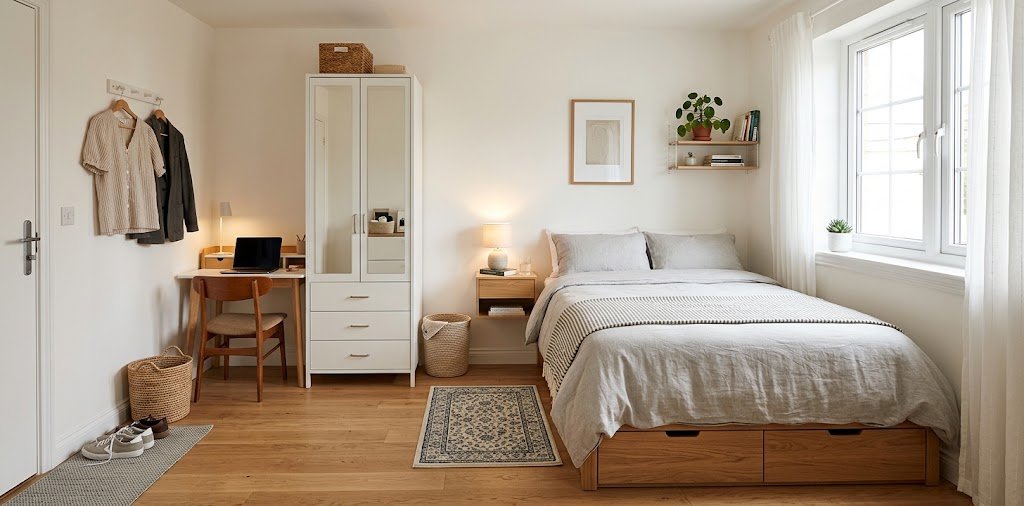
A small bedroom is not a design problem to solve. It is a design brief to follow. Once you know the rules of the room, a tight footprint can feel just as calm and pulled together as a sprawling one.
This guide walks through the planning, the furniture, and the small decisions that make a compact bedroom feel intentional rather than squeezed. For color palettes, lighting, and wall decor once the furniture plan is set, see our full guide on how to decorate your bedroom. Whether you are starting from scratch or reworking what you already own, the same principles apply.
None of this requires a renovation budget or a completely new set of furniture. Most of the difference comes from sequencing your decisions correctly and choosing pieces that are genuinely sized for the room you have, rather than the room you wish you had.
Measure Before You Shop
The biggest small bedroom mistakes happen before a single piece of furniture is bought. They happen at the measuring tape stage, or rather, the skipping of it.
Start with the basics. Note your room’s length, width, ceiling height, and the position of doors, windows, and any radiators or vents. Then measure the swing of your door and closet, since these often eat into usable floor space more than people expect.
From there, keep a simple clearance guide in mind as you plan:
- Leave 18 to 24 inches around the sides and foot of the bed, with 36 inches as the comfortable ideal
- Keep walking paths at least 30 inches wide
- Allow enough room for drawers and doors to open fully without hitting furniture or walls
Sketch your layout on paper or use a digital room planner before you commit to anything. It takes twenty minutes and saves you from buying a dresser that never quite fits.
It also helps to measure the furniture you already own before deciding what stays. A piece that looked reasonable in a larger room can suddenly feel oversized once it is boxed in by four smaller walls.
The Essential Furniture Checklist for a Small Bedroom
A small bedroom does not need less thought, it needs sharper choices. The goal is a room where every piece has a job.
Start with your bed, sized to the room rather than to what looks impressive in a showroom. Add at least one nightstand, two if your layout allows, since you will use it more than almost anything else in the room. Then bring in a storage piece, whether that is a dresser, a wardrobe, or a built-in solution that uses the wall rather than the floor.
Seating and a desk are optional additions, not requirements. Only bring them in if the room can hold them without crowding the path between the bed and the door.
Where True Homely Comes In
Our small-space collection was designed around exactly this kind of restraint. Every bed frame, nightstand, and dresser in the range is built to hold its own visually without dominating the room, and our online room planner lets you test layouts against your real measurements before you buy anything.
If you are furnishing in stages, our team can also help you sequence purchases so the room feels complete at every step, not half finished until the last piece arrives.
Choosing the Right Bed Size
The bed is usually the largest object in a small bedroom, so getting its size right changes everything else about how the room feels.
A queen or full bed is often the better choice over a king, even if the room can technically fit one. Design experts consistently point to this trade-off: a slightly smaller bed with breathing room around it reads as more comfortable than a large bed pushed wall to wall.
Platform beds with slim profiles keep the room feeling open, while storage beds turn unused space under the mattress into a home for linens, out-of-season clothing, or luggage. For rooms that double as a guest space or home office, a daybed offers the flexibility of a sofa by day and a bed by night.
Mattress thickness matters here too. A lower-profile mattress on a platform frame keeps the overall bed height down, which reads as lighter in a room with limited square footage, especially if your ceiling is also on the lower side.
Space-Saving Furniture That Actually Earns Its Spot
Not every piece marketed as “space saving” actually saves space. Some multifunctional furniture is genuinely useful, while other pieces are compromises dressed up as solutions.
Storage beds and wall-mounted nightstands are reliable choices because they remove clutter from the floor without adding visual weight. Narrow, vertical dressers do the same job as a wide one while taking up a fraction of the footprint.
Furniture with exposed legs also makes a noticeable difference. Because light passes underneath the piece instead of stopping at a solid base, the room reads as more open even when the furniture itself has not changed size.
A few combination pieces are worth considering too, such as a desk that doubles as a nightstand or a storage ottoman at the foot of the bed. These work best when they solve two real needs rather than being bought simply because they are compact.
Furniture Layout Ideas by Room Shape
The shape of your room should guide where furniture goes, not the other way around. A layout that works beautifully in a square room can feel awkward in a narrow one.
Square or Standard Small Rooms
Center the bed on the most visible wall, usually the one facing the door. This creates symmetry, leaves room for nightstands on both sides, and makes the space feel balanced rather than off-kilter.
Narrow or Rectangular Rooms
Place the bed along the longest wall instead of the short end, which keeps the walking path clear and prevents the room from feeling like a hallway. A mirror positioned opposite the window helps bounce light down the length of the room.
Box Rooms
Push the bed into a corner to free up the maximum amount of floor space. Vertical storage, such as tall narrow shelving, becomes especially valuable here since horizontal surface area is limited.
Rooms With Sloped Ceilings
Keep furniture low profile and position the bed under the lowest part of the slope, where standing height matters least. Taller pieces like wardrobes work better against the wall with full ceiling height.
Tricks to Make a Small Bedroom Feel Bigger
Furniture choice is only part of the equation. A handful of finishing touches can make the same room feel noticeably larger.
A light, cohesive color palette keeps the eye moving smoothly instead of catching on contrast. Whites, soft neutrals, and gentle pastels all reflect light rather than absorbing it, which matters more in a small room than almost anywhere else in the house.
Mirrors placed opposite windows double the sense of natural light and add a feeling of depth to the wall they sit on. Curtains hung close to the ceiling and extended past the window frame create the illusion of a taller room and a wider window, even when neither has actually changed.
Painting or wallpapering the ceiling draws the eye upward, which is an easy way to add character to a room that otherwise has limited wall space to work with.
Lighting deserves attention too. Layer a ceiling fixture with a bedside lamp or two, rather than relying on a single overhead light. Softer, warmer bulbs make a small room feel cozy instead of cramped, while harsh overhead lighting tends to flatten the space and make it feel smaller than it is.
Small Bedroom Furniture Mistakes to Avoid
A few habits show up again and again in bedrooms that feel smaller than they need to.
Oversized headboards and matching bedroom sets are the most common offenders. They look cohesive in a catalog but overwhelm a room that cannot absorb that much visual weight. Maxing out bed size for the sake of it is a close second, since it often eliminates the clearance space that makes a room feel livable.
Pushing every single piece against the walls can also backfire. While it seems like the obvious way to save space, it sometimes blocks natural movement through the room more than a slightly offset layout would.
Finally, skipping the measuring step remains the most avoidable mistake on this list. A tape measure and ten minutes of planning will save far more frustration than any clever piece of furniture.
FAQs
What furniture is essential for a small bedroom?
The essential furniture for a small bedroom usually includes a properly sized bed, at least one nightstand, and a storage solution such as a dresser, wardrobe, or storage bed. Only add items like desks or seating if they do not restrict walking space.
What is the best bed size for a small bedroom?
The best bed size depends on your room measurements, but a full or queen bed often works better than a king in a compact room. Choosing a slightly smaller bed can leave more clearance around the room and make the space feel more comfortable.
How can I make a small bedroom look bigger?
You can make a small bedroom feel bigger by using light colors, mirrors, furniture with exposed legs, vertical storage, and layered lighting. Keeping clutter under control and maintaining clear walking paths also helps create a more open appearance.
What type of furniture saves the most space in a small bedroom?
Multi-functional furniture is often the most useful option. Storage beds, wall-mounted nightstands, narrow vertical dressers, and desks that double as nightstands can help maximize available space without overcrowding the room.
Should I put my bed against the wall in a small bedroom?
It depends on the shape of the room. In narrow bedrooms, placing the bed along the longest wall can help maintain a clear walking path. In very compact box rooms, positioning the bed in a corner can free up additional floor space.
How much space should I leave around my bed?
Aim to leave approximately 18 to 24 inches of clearance around the sides and foot of the bed where possible. A wider clearance of around 36 inches is more comfortable, but this may not be practical in every small bedroom.
Are storage beds good for small bedrooms?
Yes. Storage beds can be an excellent choice because they use the space underneath the mattress for storing bedding, seasonal clothing, luggage, and other items. This can reduce the need for additional storage furniture.
What furniture should I avoid in a small bedroom?
Avoid oversized headboards, bulky matching bedroom sets, unnecessarily large beds, and furniture that blocks doors, drawers, or walking paths. Choose pieces that are proportionate to the room and serve a clear purpose
Bringing It All Together
Furnishing a small bedroom comes down to a short list of decisions made well: the right bed size, furniture that earns its footprint, a layout suited to your room’s shape, and a few light-enhancing details.
Plan first, buy with intention, and the room will feel considered rather than constrained. Our small-space collection and room planner are built for exactly this process, so you can see how a layout will feel before it becomes permanent.

[…] open. For furniture sizing, layout, and space-saving picks specifically, see our dedicated guide on how to furnish a small bedroom. Vertical storage, like tall bookshelves or wall-mounted shelving, frees up floor space while […]