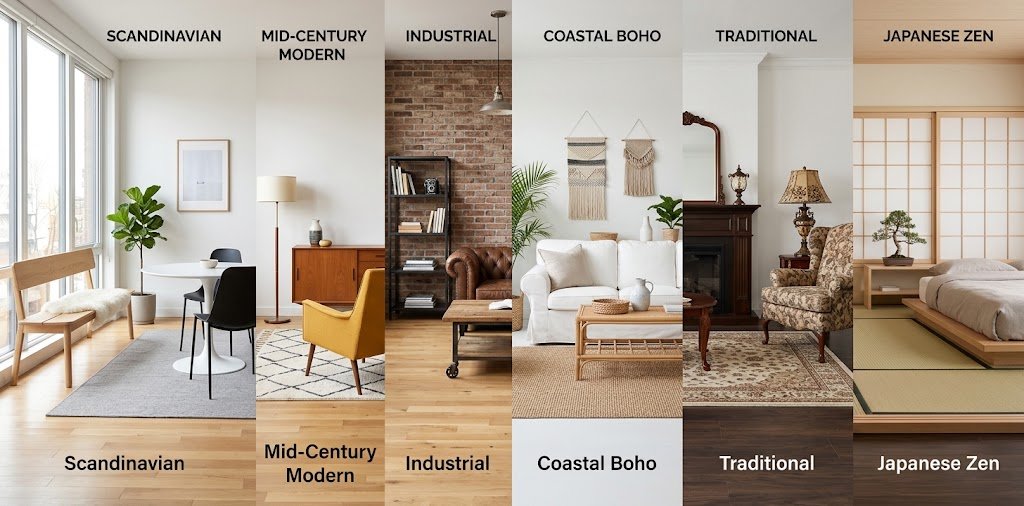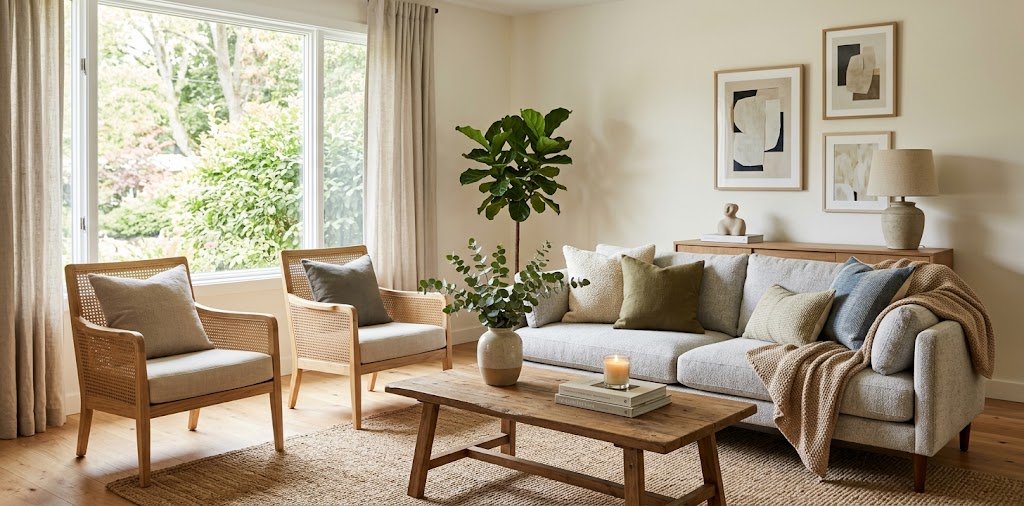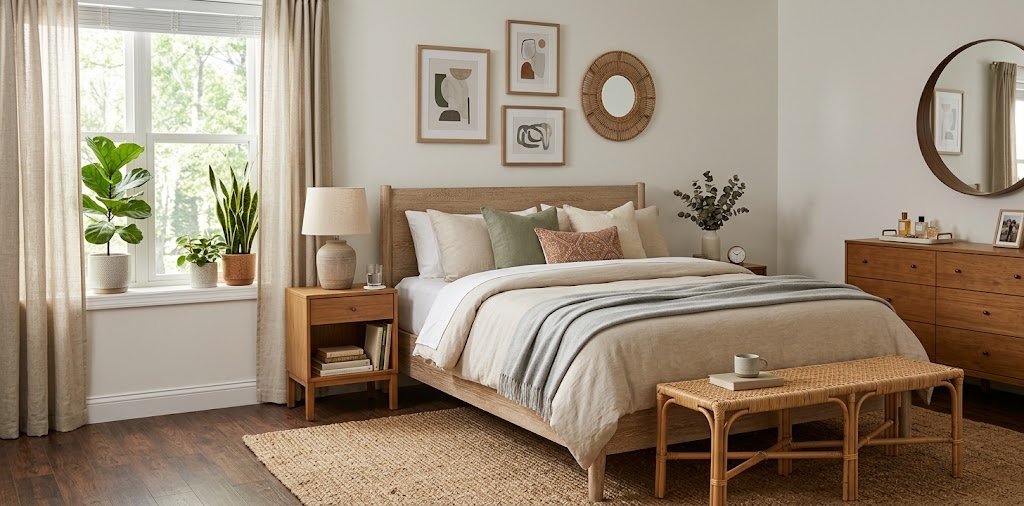

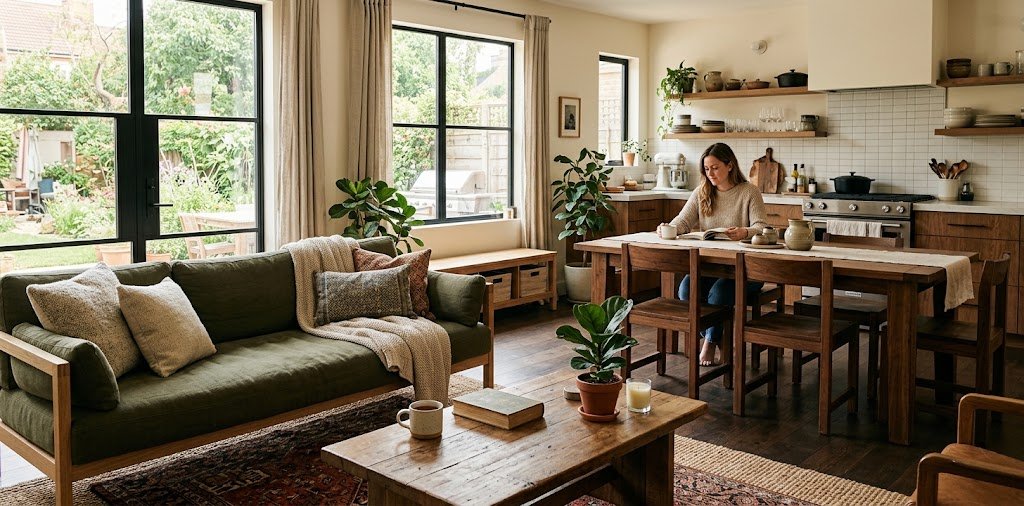
Modern home design can look impressive in a photo, but a beautiful room is not automatically a practical one. The best Modern Home Living Ideas That Actually Last combine current style with comfortable layouts, durable materials, adaptable furniture, useful storage, and finishes that do not become difficult to live with after a few months.
This matters whether you are furnishing a large open-plan home or looking for a modern living room design for small house layouts. Instead of rebuilding your space whenever a new trend appears, you can create a home with a timeless foundation and update smaller details when your taste changes.
Modern interiors today often use natural materials, comfortable seating, simple forms, layered textures, statement lighting, and carefully selected color accents. However, lasting design depends less on following every trend and more on making good decisions about proportion, function, maintenance, and quality.
What Makes Modern Home Design Last?
A lasting modern interior has three qualities: it looks good, works well, and can adapt.
A room designed only around appearance may become inconvenient when your family changes, furniture wears out, or technology moves forward. A more thoughtful approach starts with the way you actually use the room.
Design for Daily Life First
Before choosing furniture or paint, identify the activities the room needs to support.
A living room might need to accommodate:
- Everyday relaxation
- Watching television
- Reading
- Conversation
- Children or pets
- Working from home
- Entertaining guests
- Additional storage
Once those requirements are clear, decorative decisions become easier. A sectional may work better than separate chairs in one home, while a compact sofa and movable occasional chairs may be more practical in another.
Choose a Timeless Base
A timeless base does not mean making your home plain. It means keeping expensive or difficult-to-change elements relatively adaptable.
Walls, flooring, large furniture, cabinetry, and built-ins deserve more consideration than inexpensive decorative accessories. Neutral architectural finishes can provide flexibility, while artwork, cushions, rugs, lamps, and smaller accents can introduce stronger colors and seasonal trends.
This approach allows your home to evolve without requiring a complete redesign.
Build a Modern Living Room Around Proportion
One of the most overlooked Modern Home Living Ideas That Actually Last is getting the scale of the room right.
A large sofa in a small room can block circulation, while tiny furniture can make a spacious room feel disconnected. The objective is not simply to buy attractive pieces; it is to create relationships between them.
Start With the Room Measurements
Measure the room before purchasing major furniture. Record:
- Wall lengths
- Door locations
- Window positions
- Ceiling height
- Radiators or vents
- Electrical outlets
- Built-in features
- Walking routes
Use those measurements to establish furniture zones before shopping.
For a small room, avoid filling every wall. Leaving some visual breathing room can make the space feel larger. In larger rooms, use rugs, seating groups, lighting, or furniture arrangements to define separate areas rather than pushing everything against the perimeter.
Protect the Main Walking Paths
A modern room should feel open because movement is easy, not simply because it contains minimal furniture.
Keep major circulation routes clear and consider how doors open, how people enter the room, and how frequently they move between seating, windows, storage, and adjacent rooms.
This functional planning is particularly valuable in a modern living room design for small house because every square foot has a job.
Modern Living Room Ideas 2026 That Will Age Well
Some current design directions have stronger long-term potential than others. The most durable trends are those that improve comfort or functionality rather than existing only because they are fashionable.
Warm Neutrals Instead of Harsh Monochrome
Warm whites, beige, taupe, sand, muted green, brown, and soft gray can create a calm foundation. They also work with wood, stone, metal, woven materials, and colorful accessories.
You do not have to eliminate black or white. Instead, use contrast strategically so the room has definition without becoming visually severe.
Natural Materials and Organic Texture
Wood, stone, linen, wool, rattan, leather, and other tactile materials can make a modern room feel less sterile.
Natural materials also tend to work across different decorating styles. A wood coffee table can suit minimalist, Scandinavian, contemporary, or transitional interiors without requiring the rest of the room to match a specific trend.
Curved and Soft Furniture
Rounded sofas, curved chairs, oval tables, and arched details can soften rooms dominated by straight architectural lines.
The key is moderation. You do not need every item to have a curved profile. One or two softer forms can provide contrast while allowing the rest of the room to remain simple.
Flexible Furniture
Furniture that performs more than one function is especially useful in smaller homes.
Consider storage ottomans, nesting tables, modular seating, slim consoles, extendable tables, and movable side tables. These pieces can change with the way you use the room.
Create a Modern Living Room Wall Design That Can Evolve
Walls have a major influence on how a living room feels, but permanent treatments can become expensive to change. The most successful modern living room wall design balances visual impact with adaptability.
Use One Strong Focal Wall
Instead of decorating every wall, choose one area to receive greater attention.
A focal wall could use:
- Wood slats
- Fluted panels
- Paint
- Stone or stone-look finishes
- Textured plaster
- Carefully selected wallpaper
- Built-in shelving
- A media wall
The remaining walls can stay quieter, allowing the focal feature to work without competing with furniture and artwork.
Think Beyond the TV Wall
Many modern homes automatically turn the television into the main feature. That is not always necessary.
A fireplace, artwork, architectural detail, shelving, or a large window can become the room’s visual anchor. If a television is important to your household, integrate it into a balanced composition rather than allowing it to dominate the entire wall.
Latest Wall Design for Living Room: Choose for Longevity
The latest wall design for living room does not necessarily need to be the newest material available. A better question is whether the treatment will still look appropriate when the trend disappears.
Simple paneling, carefully proportioned built-ins, natural wood details, and restrained paint colors generally offer more flexibility than highly specific decorative treatments.
For homeowners seeking a latest wall design for living room simple, consider a single painted accent wall, slim vertical molding, subtle wood paneling, or floating shelves with a limited number of objects.
Choose Flooring for Real Use, Not Just Appearance
Flooring receives daily wear, so durability should be considered alongside style.
Match the Material to Traffic
A living room used by children, pets, or frequent guests needs different flooring priorities from a formal sitting room.
Hardwood provides warmth and can often be refinished. Porcelain tile offers high durability and works particularly well in certain climates. Quality engineered wood can provide a similar appearance to hardwood with different construction characteristics. Area rugs can add softness while also defining seating zones.
Houzz’s current modern-living-room results demonstrate how widely flooring choices vary, including hardwood, concrete, porcelain tile, marble, vinyl, laminate, and other surfaces.
The important point is to choose according to maintenance, moisture exposure, traffic, pets, and expected lifespan rather than selecting a material solely because it photographs well.
Make Lighting Part of the Architecture
Good lighting can make an ordinary modern room feel considered and comfortable.
Instead of relying on one ceiling fixture, combine several layers.
Ambient Lighting
This provides general illumination throughout the room. Recessed fixtures, ceiling lights, or well-distributed architectural lighting can provide the foundation.
Task Lighting
Task lighting supports specific activities such as reading or working. Floor lamps and adjustable table lamps are useful because they can move when furniture arrangements change.
Accent Lighting
Accent lighting highlights artwork, shelving, architectural features, or decorative objects.
Layering these sources gives you control over the room at different times of day and avoids the flat appearance produced by a single overhead light.
Use Color in Ways You Can Change
Color is one of the easiest ways to update a room, so it does not always need to be permanently built into expensive elements.
If you love a strong color, use it in artwork, cushions, curtains, a chair, a rug, or smaller furniture pieces. These can be replaced more easily than flooring, cabinetry, or wall construction.
A restrained base also makes it easier to experiment with the modern living room ideas 2026 without redesigning the entire space every year.
Create Modern Luxury Without Making the Room Fragile
A modern luxury living room design is not necessarily one filled with expensive objects. Luxury is often communicated through proportion, craftsmanship, materials, lighting, comfort, and restraint.
Invest in the Pieces You Use Most
If your sofa is used every day, prioritize its frame, suspension, upholstery, seat construction, and comfort rather than choosing solely by appearance.
The same principle applies to dining tables, frequently used chairs, flooring, cabinetry hardware, and lighting fixtures.
Spend less on items that are primarily decorative and easier to replace. Spend more thoughtfully on elements that receive constant use or are expensive to repair.
Leave Room Around Statement Pieces
One exceptional light fixture, artwork piece, table, or chair can have more impact than a room filled with decorative objects.
Negative space gives important pieces visual importance and helps prevent modern interiors from becoming cluttered.
Make Small Living Rooms Feel Larger
A small home does not prevent you from creating a sophisticated modern interior. It simply requires more disciplined planning.
Use Furniture With a Smaller Visual Footprint
Furniture with raised legs can allow more of the floor to remain visible. Slim arms, compact depths, wall-mounted storage, and appropriately scaled tables can also reduce visual heaviness.
Avoid choosing a large sectional simply because it is popular. Measure the room and determine how much seating you genuinely need.
Use Vertical Space
When floor space is limited, walls become valuable.
Tall shelving, vertical artwork, narrow cabinets, and carefully designed wall storage can increase functionality without consuming much floor area.
This is especially useful when developing modern living room design for small house interiors.
Keep the Visual Palette Controlled
Using too many contrasting colors, materials, or decorative objects can make a small room feel fragmented.
A limited palette with variations in texture often creates greater depth without visual clutter.
Build Storage Into the Design
One of the clearest differences between a room that looks good in photographs and one that works every day is storage.
Remote controls, chargers, books, toys, blankets, electronics, and everyday objects quickly create clutter when they do not have designated places.
Built-in cabinetry, closed media storage, storage benches, drawers, and baskets can hide everyday items while leaving display space for things worth showing.
Good storage should also remain accessible. If putting something away takes too much effort, it is unlikely to stay organized.
Mix Modern and Personal Elements
A lasting home should not look like a showroom.
Family photographs, collected artwork, books, vintage furniture, handmade objects, travel pieces, and inherited items can give a modern room personality. Combining old and new can also make the interior less dependent on a single decorating period.
This is an important distinction between a room designed around a trend and a home designed around the people who live there.
Modern Living Room Images Simple: What to Look For
When searching for modern living room images simple, do not focus only on the color or furniture shown in the photograph.
Study the underlying design decisions.
Look at:
- Furniture scale
- Distance between seating
- Rug size
- Lighting placement
- Window treatment
- Wall proportions
- Storage solutions
- Material combinations
- Empty space
- Relationship between furniture and architectural features
Houzz’s large image collection illustrates how modern spaces can vary dramatically by size, color, flooring, wall treatment, fireplace, TV arrangement, and architectural style.
The most useful inspiration images are those that help you understand why a room works, not just what it looks like.
What to Avoid if You Want a Home That Lasts
Some design decisions can make a room date quickly or become inconvenient.
| Short-Term Choice | More Lasting Alternative |
|---|---|
| Trend-specific furniture set | Individual pieces with compatible proportions |
| Extremely bold permanent finish | Restrained architectural finish with changeable accents |
| Oversized furniture in a small room | Furniture scaled to the available floor area |
| Decorative-only storage | Storage designed around daily habits |
| One harsh light source | Layered ambient, task, and accent lighting |
| Matching everything | Coordinated materials with controlled variation |
The goal is not to avoid every trend. It is to decide which trends are worth incorporating permanently and which are better introduced through replaceable elements.
A Practical Formula for Long-Lasting Modern Design
If you are starting from scratch, use this sequence:
1. Define How the Room Will Be Used
List the activities and people the room must support.
2. Measure Before Shopping
Create a basic floor plan and identify circulation paths.
3. Select the Permanent Foundation
Choose flooring, major wall treatments, built-ins, and other expensive elements carefully.
4. Add the Main Furniture
Prioritize comfort, scale, durability, and flexibility.
5. Layer Lighting
Combine general illumination with task and accent sources.
6. Add Texture
Use wood, fabric, rugs, plants, stone, metal, or other tactile materials to create depth.
7. Introduce Personality
Add artwork, books, collected pieces, and meaningful objects.
8. Add Trends Last
Use replaceable accessories to bring in current colors, shapes, and decorating trends.
This sequence prevents temporary trends from controlling the entire design.
Frequently Asked Questions
What are the best Modern Home Living Ideas That Actually Last?
The most reliable ideas focus on proportion, comfortable furniture, durable materials, adaptable colors, useful storage, layered lighting, and natural textures. These principles remain useful even as individual decorating trends change.
How can I make a small living room look modern?
Use furniture that fits the room rather than oversized pieces, maintain clear walking routes, use vertical storage, limit visual clutter, and choose a controlled color palette. Wall-mounted or built-in storage can also preserve valuable floor space.
What is a modern living room wall design that will not look dated?
Simple painted feature walls, restrained wood paneling, well-proportioned built-ins, subtle textured finishes, and thoughtfully designed shelving generally offer more flexibility than highly trend-specific treatments.
How do I create a modern luxury living room design on a reasonable budget?
Invest in the pieces that receive daily use, such as the sofa, flooring, and lighting, while using affordable accessories for decoration. Good proportions, consistent materials, and uncluttered styling can make a room feel more sophisticated without requiring every item to be expensive.
Should modern homes use neutral colors?
Neutral colors are useful because they provide flexibility, but a modern home does not need to be entirely neutral. Natural greens, blues, terracotta, brown, black, and other controlled accents can add personality while maintaining a balanced foundation.
How often should I change my living room design?
There is no need to completely redesign a well-planned room every year. Keep the main elements stable and refresh smaller pieces such as cushions, artwork, rugs, lamps, and decorative objects when your preferences change.
Conclusion
The strongest Modern Home Living Ideas That Actually Last are not based on chasing every new decorating trend. They begin with the fundamentals: a practical layout, appropriate furniture scale, durable materials, useful storage, comfortable lighting, and a color scheme that gives you room to evolve.
Current design ideas can still have a place in your home, but they should support the way you live rather than dictate it. Use permanent elements for the foundation and changeable pieces for personality and trends. Whether you are creating a compact apartment or a spacious modern luxury living room, this approach gives you a space that feels current today while remaining comfortable, functional, and attractive for years to come.